

The Honorary Abbot of Wat Phra Dhammakaya
Most Venerable Dhammajayo is the Honorary Abbot of Wat Phra Dhammakaya. He has devoted about 50 years of his life to the propagation of Buddhism and Dhammakaya Meditation, which has attracted millions of devotees in Thailand and in over 80 branches in 33 countries around the world. Living a life of great simplicity and purity, Ven. Dhammajayo has contributed billions of baht to public charities, which include financial aid to 30,000 teachers in Southern Thailand, providing requisites and food for mass-ordinations of more than 10,000 monks, twice-yearly in towns and villages throughout Thailand, and offering relief for natural disasters, including floods, hurricanes and tsunamis. The magnificent structures at Wat Phra Dhammakaya have been built from public support and without any government funding, and will remain the property of the nation and Buddhism for future generations to come.
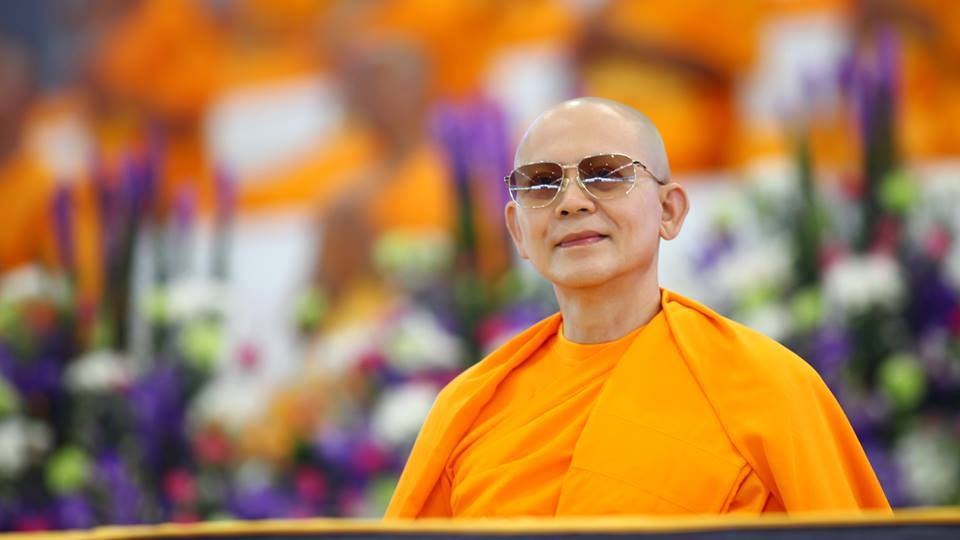

He has done all this through voluntary donations, without a single Baht subsidized by the government. His many awards and recognitions from Thailand’s Senate, multiple foreign governments, and Buddhist temples and associations across Asia are a testament to his constant and continuing efforts to promote peace, morality, and dedication to Buddhist principles.
The elderly Honorary Abbot of Wat Phra Dhammakaya now suffers from several illnesses, including deep vein thrombosis and a chronic leg ulcer. He is under investigation by Thailand's Department of Special Investigation for money laundering and accepting stolen property.
Luang Por Dhammajayo Stands Wrongly Accused
A great deal of misinformation has been issued by Thailand’s Department of Special Investigations (DSI) in regard to the summons of the Abbot of Wat Phra Dhammakaya, Most Venerable Dhammajayo. This deliberate misinformation has been reported in the local media, with the result that many readers are confused regarding the true circumstances behind this case.
Find out the truth here.
Latest Releases on Dhammakaya Uncovered



On December 26, 2016, National Broadcasting and Telecommunications Commission (NBTC) permanently revoked the license of the Dhamma Media Channel (DMC.TV) on grounds of it being a threat to the national security of Thailand.


On December 26, 2016, National Broadcasting and Telecommunications Commission (NBTC) permanently revoked the license of the Dhamma Media Channel (DMC.TV) on grounds of it being a threat to the national security of Thailand.

Protracted.. lengthy.. and not yet over
Agents on this special case cannot remain indifferent
Let’s clarify a few burning questions...

This past week, news of plans to arrest the Abbot of Wat Phra Dhammakaya drew great interest from the media and people throughout the country. Within the intrigue are people who perceive it as a political division of camps. Many are convinced that the Abbot is guilty and a swift and definitive prosecution is needed. Opinions are pouring from people of various backgrounds--some possessing Right View while others holding the opposite. The faces of this latter group are familiar ones, where names are not necessary to guess who they are.

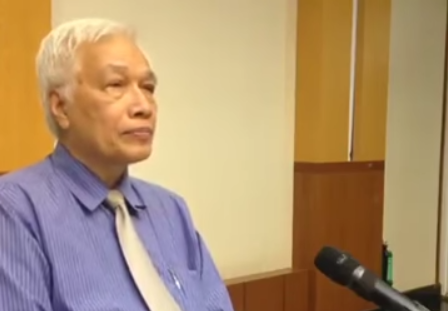
Peace TV’s “Discussing the News and Talking about Dhamma” host, Assistant Professor Dr. Silp Rasri interviews a representative from the legal world, Lawyer Arkom Rattanapojanaroj, and an expert on the Monastic Code of Discipline, Dr. Jamnong Kantika.
In the interview, the lawyer, Mr. Arkom, refers to Section 39(2) in the Criminal Procedure Code to challenge DSI and affirm Venerable Dhammajayo’s innocence - there is no need for him to surrender.

On a recent Daily Dose, the host, M.L. Natthakorn, takes on the topic of amending the Sangha Act. This potential modification centers specifically on Section 7 of the Sangha Act of 1962 - the nomination and assignment of the Supreme Patriarch. The modification will essentially transfer the power to nominate and select the Supreme Patriarch from the hands of the Supreme Sangha Council to that of the Prime Minister. The long term impact this alteration will have, in the eyes of Phra Meteedhammajarn, is colossal and irreparable.

Talk show host of Voice TV's Big Dose Program, M.L. Natthakorn, interviews Mr. Sampan Sermcheep, lawyer of Wat Phra Dhammakaya, on May 21, 2016 about the ongoing litigation against the temple and Venerable Dhammajayo.

What images come to mind when you hear the word Buddhism? For many, they are images popularized by Hollywood as a mystical world, quaint and rustic; a temple of photogenically peeling paint, romantically overgrown courtyard, and a picaresque Buddha image suitably ancient and ornate. If we add a saffron-robed monk with an inscrutable expression who speaks in riddles and proverbs, then the picture is nearly perfect. Lights, camera, action! Into this scene enters a protagonist who is obsessed with wealth or status but whose soul, despite himself, longs for something “more”; and by seeing the simplicity of the monk’s life, a life of no wealth, property, or even modern appliances, the protagonist learns about the important things in life. Does this all sound familiar and even cliché? That’s because it is.

In a recent interview [approx. June 2016], former Commissioner-General of the Royal Thai Police, Police General Sereepisuth Temiyaves, offers his two cents and suggestions to DSI regarding an alternative way to conduct their case against Phrathepyanmahamuni, Abbot of Wat Phra Dhammakaya. He also questions why they’re rushing this case. Pol. Gen. Sareepisuth is a well known national figure who is respected for his tenacious stance on crime and has an impeccable track record.

Many people have questioned the actions of the abbot’s supporters who aren’t allowing him to be tried by the courts. These observers state that the courts should decide whether he is guilty or not - not his supporters - and if Abbot Dhammajayo is truly innocent, his supporters shouldn’t be afraid to let the courts decide.
A recent court case unearthed, however, clearly illustrates just how the Thai judicial system is not always fair and just, and in this case example, the justice system can be a heartless example of what happens when an opportunity presents itself before the “haves” and the “have-nots.”

In Her View Host, Kampaka, brings up questions the public has been asking about regarding the Dhammakaya case: “The problem started with the donation of illicit money to Wat Phra Dhammakaya, entangling a monk and the temple in this very public lawsuit. What makes the case even more complex is Thai society is very divided politically. The lawsuit is a very sensitive one. Let’s take a peek into our society by delving into this issue with Kampaka on this program, In Her View.

Strong and successful organizations bring pride to a nation’s citizenry. Such organizations become an integral part of the country, and often receive governmental support to make themselves competitive for international markets. In the United States and much of Europe, the support citizens have for one another have strengthened their nations socially and economically. This applies to spiritual and religious organizations as well. Although individuals may have varied opinions in regards to beliefs, they still respect each other and try to co-exist harmoniously.

On May 26, 2016, TNN news anchor conducted a phone interview with Mr. Paramet Intarachumnum, Deputy Director General of the Office of Criminal Prosecutor, whereby Mr. Intarachumnum provides his expert opinion on DSI notifying suspects regarding the hearing of charges.

These graphics illustrate the transparent trail of funds as donated via cheques by Mr. Supachai Srisupa-aksorn to Most Ven. Dhammajayo of Wat Phra Dhammakaya, clearly challenging the grounds for the money laundering allegations brought forth by Thailand's Department of Special Investigation.

DSI has launched money laundering allegations against Venerable Dhammajayo.
According to Section 5 of the Anti-Money Laundering Act, the accused actions must meet the following criteria in order for it to be considered a crime:

A Thai news anchor recently questioned a high-ranking DSI official on the Thairath TV show, "Tam Trong Trong (Direct Questions) with Jomkwan", which aired on May 18th, 2016, at 7pm UTC. This exchange was in regard to Wat Phra Dhammakaya's request for DSI to send a physician to examine and verify that the Abbot was truly ill and therefore unable to travel to DSI HQ to hear the charges against him.
Thailand, a country where Buddhism has deep roots, has experienced recent political and social conflicts and upheaval in which Buddhism has played a major role. Buddhism, as both a religion and way of life, provides many Thais and an increasing number of foreigners with moral guideposts and a sense of stability when faced with the rapid pace of change in Thailand and the rest of the world. However, Buddhism is also highly interwoven into Thai politics. In Thailand’s current political climate where the government has been accused recently of numerous human rights violations, Buddhist religious leaders are not immune to such abuse.

Thai newspapers have been reporting negative opinions about Venerable Dhammajayo, the Abbot of the Dhammakaya Temple (Wat Phra Dhammakaya). Whether the reader is new to Thailand, or just curious, it's good to listen to more than one view of the situation, so that we can develop a more accurate picture of what's going on. As a foreigner who has closely followed the workings of the temple for almost 10 years, I would like to share my opinion on some of these issues.

Wat Phra Dhammakaya has been fraught by the Department of Special Investigation's (DSI) claim of money laundering - a complicated topic. This video and these graphics attempt to take out the complications by presenting them in a simple form, and also attempts to dismiss any claims of Wat Phra Dhammakaya's involvement in money laundering.
1. Why did DSI choose to release a written statement instead of an announcement via live press conference? This is highly unusual for a high profile case being followed closely by the public, particularly, when reporters from most of the Thai media outlets had been on standby outside of DSI headquarters for most of the day.

What Transpired and How It Can Be Rectified
Klongchan Credit Union Cooperative (KCUC) initially had a working capital of 21,000 M baht. The issue arose when it permitted 12,000 M baht in loans, making itself illiquid—a state of lacking sufficient funds to meet its obligations. This led to a deficit preventing the cooperative from having available funds for circulation, putting it at risk for bankruptcy. Potential approaches to rectify the situation and restore the cooperative are as follows:
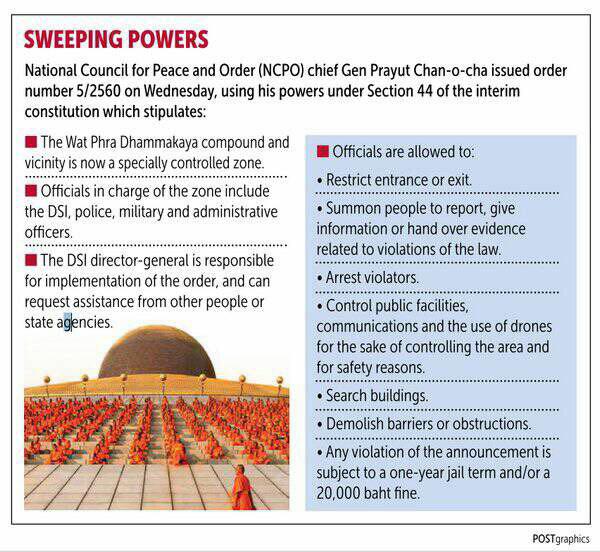
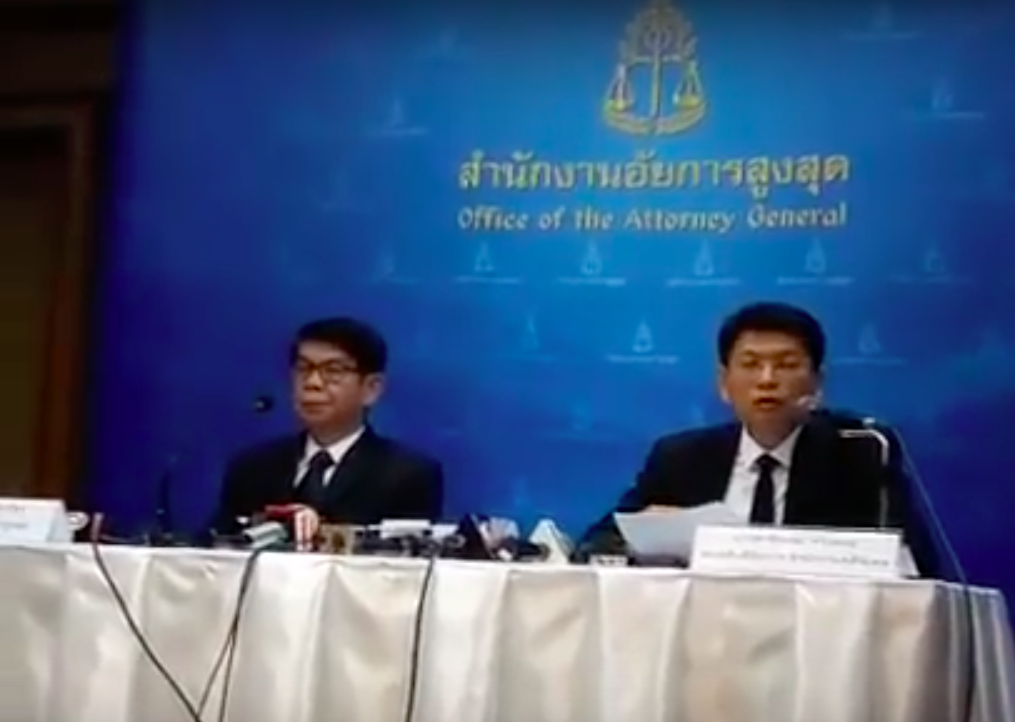

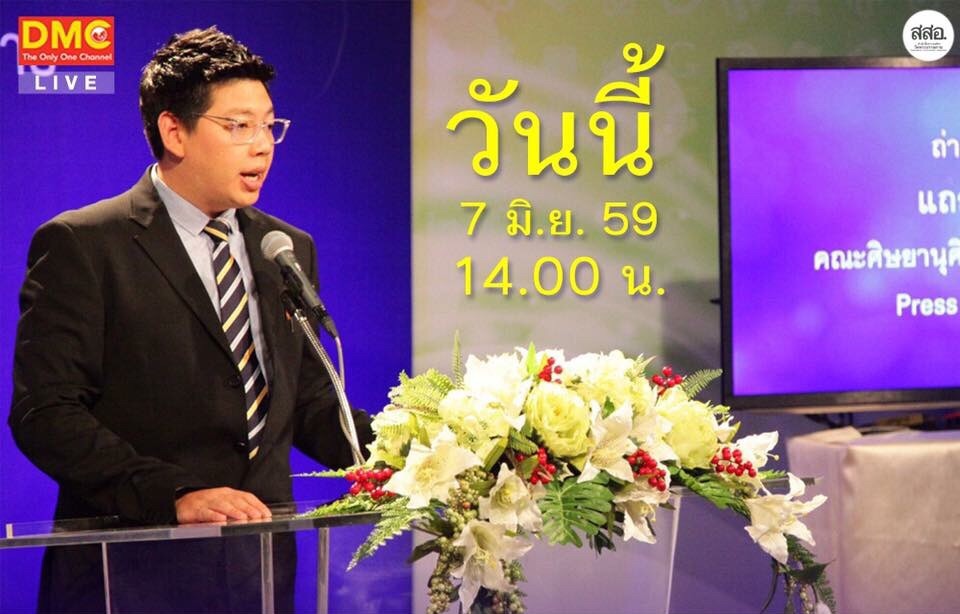


Check out Dhammakaya Uncovered's newest section. For those who don't think the weight of our content is good enough, we have taken the liberty of compiling a list of news articles from several reputable news outlets whose journalists had the courage to report on what's really going on with the Dhammakaya case. See our section on News Reports on the vertical or click here.
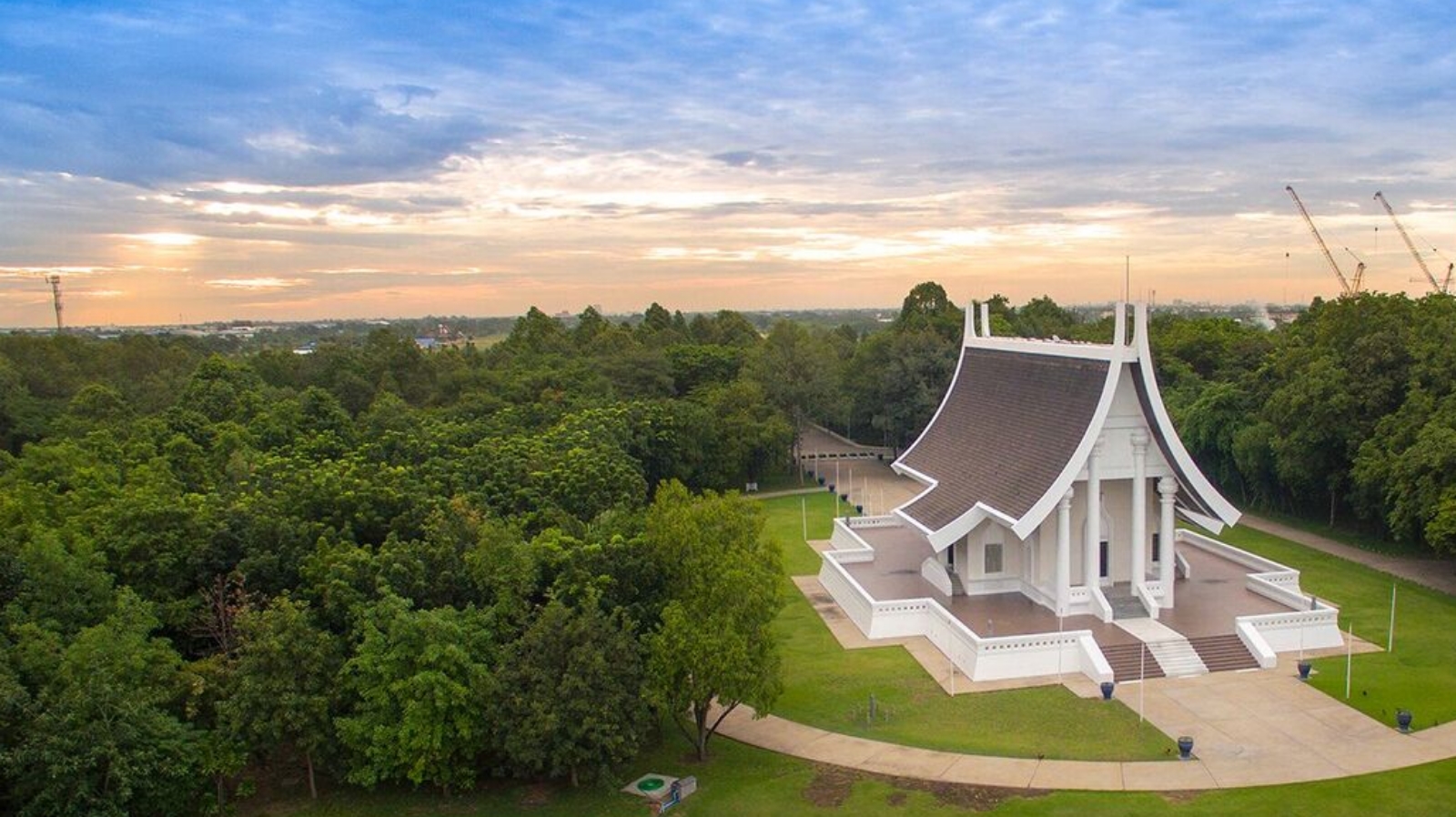
About the dhammakaya temple
Find out about the Dhammakaya Foundation, its mission, its methods, and its decades of societal and religious works.

READ OUR WHITE HOUSE PETITION
Read our petition to the White House, and the response from the We The People team.
On a recent Daily Dose, the host, M.L. Natthakorn, takes on the topic of amending the Sangha Act. This potential modification centers specifically on Section 7 of the Sangha Act of 1962 - the nomination and assignment of the Supreme Patriarch. The modification will essentially transfer the power to nominate and select the Supreme Patriarch from the hands of the Supreme Sangha Council to that of the Prime Minister. The long term impact this alteration will have, in the eyes of Phra Meteedhammajarn, is colossal and irreparable.